Root canal treatment
A root canal removes inflamed or infected pulp from inside a tooth so you can keep it. It is done with local anesthetic, under a surgical microscope, and most teeth are finished in one or two visits.
Mountain View 650-691-0999Saratoga 408-252-5700
When a root canal is needed
Inside every tooth is the pulp, a soft tissue of nerves and blood vessels. Deep decay, a crack, repeated dental work or a blow to the mouth can let bacteria reach it. Once the pulp is inflamed or infected, it cannot heal on its own.
Signs include:
- a toothache, especially when you chew
- sensitivity to hot or cold that lingers after the food or drink is gone
- tender or swollen gums near the tooth
- a pimple-like bump on the gum
- a tooth that has darkened
Sometimes there are no symptoms at all, and the problem shows up on an x-ray. Pain from a tooth can also be felt in another tooth, the ear, the head or the neck, which is one reason dentists send hard-to-pin-down pain to an endodontist.
Your visit
Dr. Hirose examines the tooth, takes x-rays and tests how the tooth responds. He shows you what he sees and explains your options, including what happens if you wait. If you are in pain, the goal of that first visit is to get you comfortable.
During treatment
- Numbing. The tooth is numbed with local anesthetic.
- A clean, dry field. A thin sheet called a rubber dam goes around the tooth to keep it clean and dry. A latex-free dam is available.
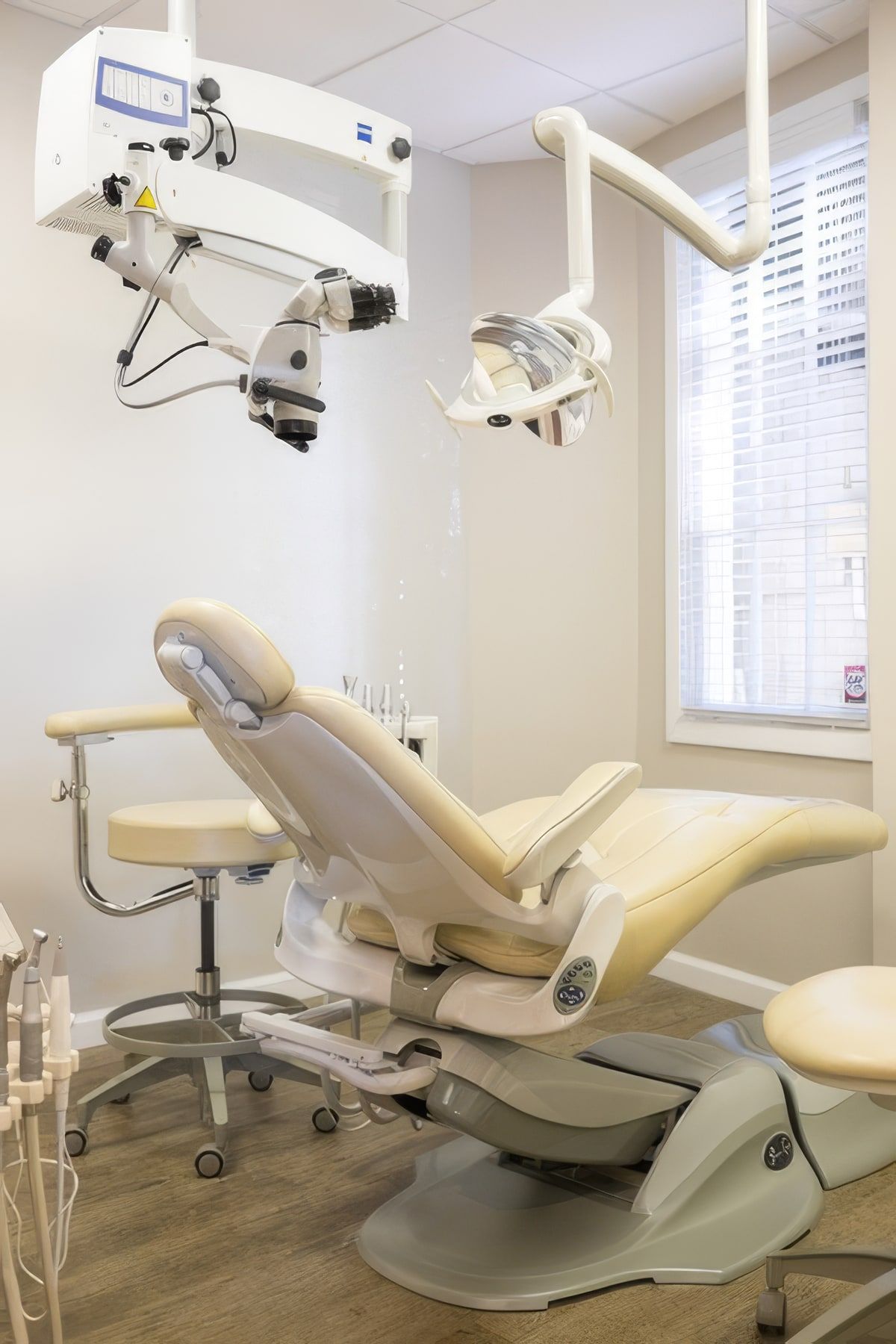
- Cleaning the canals. Working under a surgical microscope, Dr. Hirose removes the damaged pulp and cleans and shapes each canal. Magnification and light help him find small extra canals and cracks that are easy to miss.
- Sealing. The canals are filled and sealed to protect the tooth from new infection, and the opening is closed with a filling.
How well it works
In a study of more than 1.4 million teeth treated across all 50 states, 97 percent were still in place eight years after their root canal. A systematic review of 14 clinical studies found that 86 to 93 percent of teeth were still in place two to ten years after treatment. Dr. Hirose talks with you about the outlook for your particular tooth before you decide.
Afterward
Your tooth may feel tender for a few days. Chew on the other side until your dentist has restored it, and keep that appointment, because the final filling or crown protects the tooth. If a root canal does not heal, there are still good options, starting with retreatment.
Sources
- Salehrabi R, Rotstein I. Endodontic treatment outcomes in a large patient population in the USA, an epidemiological study. J Endod, 2004.
- Ng YL, Mann V, Gulabivala K. Tooth survival following non-surgical root canal treatment, a systematic review of the literature. Int Endod J, 2010.
- Pak JG, White SN. Pain prevalence and severity before, during, and after root canal treatment, a systematic review. J Endod, 2011.
Questions patients ask
Will a root canal hurt?
The tooth is numbed first, and most people feel pressure rather than pain. In a systematic review, about 81 percent of patients had pain before treatment, about 40 percent one day after, and about 11 percent a week after. The numbness usually wears off in two to three hours.
How many visits will it take?
Many teeth are finished in a single visit. Some take two, and occasionally three. It depends on how much infection or inflammation there is and how complex the roots are. Dr. Hirose would rather do it right than rush to a time limit, and he tells you the plan before you start.
Can I drive myself home?
Yes. Root canal treatment is done with local anesthetic, so you can drive and go back to your day. Most people feel close to normal within a day or two.
Do I need a crown afterward?
Most back teeth do, because a crown protects the tooth from cracking. Your general dentist places it. Dr. Hirose sends them a report and your x-rays so they know exactly what was done.
Will I need to come back?
Yes, for a short check about a year later. An infection at the root tip can take up to two years to heal fully, so we look at the tooth again during that time. The office sends you a reminder when it is time.
Is it better to pull the tooth?
Keeping your natural tooth is usually the better choice. After an extraction the gap has to be filled with an implant or bridge to keep your bite stable, which means more treatment and more cost. If extraction is the better option for a particular tooth, Dr. Hirose will tell you why.
Related
Relief starts with a call
Call the office closest to you. If you are in pain, say so when you call, and the team will look for the soonest opening at either office.
Request an appointment-
Mountain View
100 West El Camino Real, Unit 67
-
Saratoga
18988 Cox Avenue, Suite D